About Craig Westwood
Craig Westwood is an English singer-songwriter and musician whose songs draw on a lifetime of listening, writing and making music. Rooted in the melodic, lyric-driven songwriting traditions he grew up with, his music looks back without being confined by nostalgia — and remains equally interested in where songs, recording and music itself might go next.
Some of those songs are new. Others have taken a rather longer route to get here.
Craig has been writing songs for most of his life and increasingly finds himself returning to ideas first written decades ago alongside entirely new material. It has reinforced a simple belief: songs don’t have a use-by date.

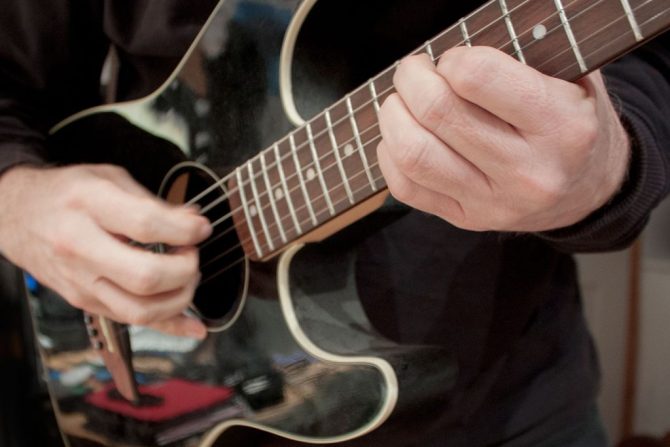
A song written thirty or forty years ago can suddenly find its moment. An unfinished idea can finally reveal what it was supposed to become. New technology can provide an unexpected way of hearing an old piece of music afresh.
That meeting of past and present has become an important part of what Craig is doing now: combining old-school songwriting, melody and musicianship with new ways of making, sharing and talking about music.
His influences reach back to the great singer-songwriters and records of the 1960s and 70s — including The Beatles, James Taylor and Joni Mitchell — and later artists including Talking Heads, Thomas Dolby, Tom Petty and John Mayer. The common thread is the song itself: something that should still work when everything else is stripped away to a voice, an instrument and a story.
Experimenting with sound
Craig’s interest in experimenting with music and technology goes back more than forty years.
While studying art at Bretton Hall in 1983, he met composer Edward Williams, then recently known for his acclaimed score for the BBC’s Life on Earth. A conversation about Craig’s experimental music projects resulted in an unexpected invitation to use Edward’s Bristol studio.
Edward introduced him to early synthesisers, voltage-controlled sound manipulation and multitrack tape recording — and then effectively handed him the studio for two weeks to experiment, play and record.
After graduating, Craig spent two years working with video artist Brian Johnson at the community-funded Electronic Arts Workshop, helping to run public workshops involving video, photography and sound, including a small MIDI-based music studio.
The equipment has changed beyond recognition since then. The curiosity behind using it hasn’t.
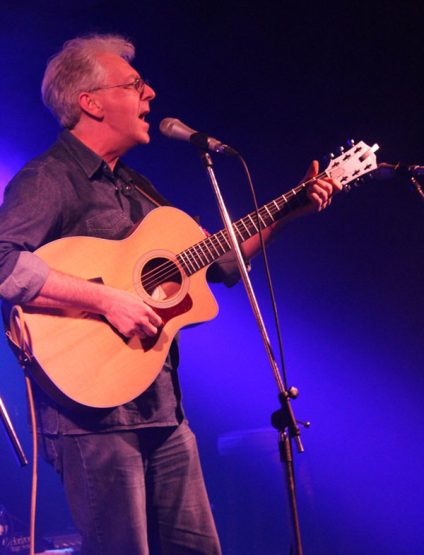
By 2018, he was playing open mics and gigs, recording at Chapel Studios in Leeds, and increasingly producing and mixing at home. He joined producer Warren Huart’s Produce Like A Pro community, continued developing his recording skills and gradually built his own studio setup.
Then, in August 2019, came an unexpected boost when Craig won the Vero Great Guitar Contest.
By early 2020 he was finally preparing to release his own music.
Then the world stopped.
Thirty years away from the stage
Craig’s early attempts at solo performance were considerably less successful. Severe stage nerves eventually culminated in freezing during an important club audition and being unable to finish his set. He came away convinced that he simply didn’t have what it took to perform.
For the next thirty years, music became a largely private pursuit. The songwriting and recording never stopped, but the audience was mostly friends and family — some of whom were telling him:
“These are good. You should do something with them.”
In 2016, Craig finally decided to find out whether they were right. Seeking professional help with artist development led to a friendship with musician and guitarist Andrew Beverley, whose coaching was invaluable in helping Craig develop the stagecraft and confidence to help get him back onto a stage.
Making music when nobody could meet
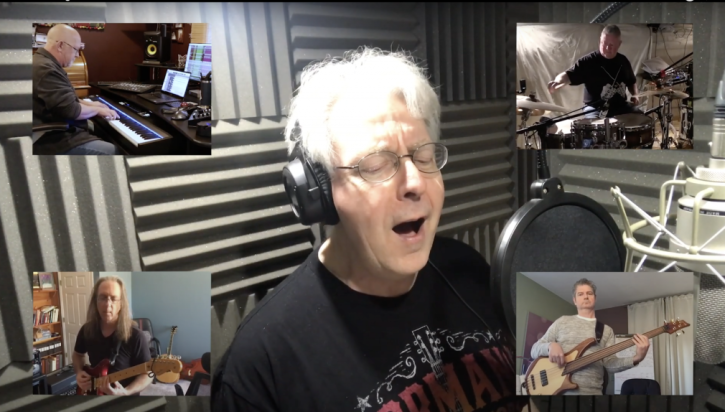
The COVID years produced an unexpected alternative.
Through the Produce Like A Pro community, Craig became part of P.ii (“Pie”), a virtual band bringing together musicians from the UK, US, Belgium and the Netherlands.
Recording remotely, P.ii released Craig’s song Thinking on Your Own in October 2020. After decades of writing and recording, it became his first commercially released song.
Other commitments subsequently put further P.ii releases on hold, although the band members remain friends and the possibility of more music remains.
More importantly, a line had finally been crossed. The songs weren’t going to remain private any longer.
Songs don’t have a use-by date
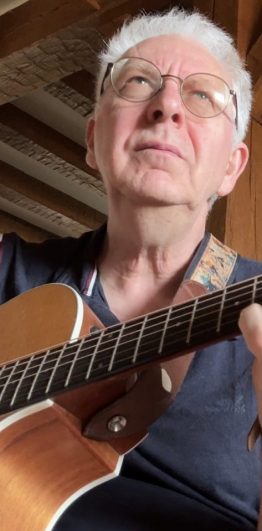
Today, Craig is writing, recording, performing and releasing music in his sixties — including new songs alongside others whose beginnings reach much further back.
There is no attempt to recreate the past. The point is to discover what those songs can become now.
Craig continues to produce much of his own work, something that began through necessity and gradually became part of the creative process itself. More recently, that lifelong interest in recording technology has extended to AI-assisted production — using new tools to explore arrangements, instrumentation and possibilities around songs that still begin, fundamentally, with a songwriter, a guitar, and an idea.
Right now, that experimentation is producing some of the music he is most excited about releasing.
One room at a time
Craig has also become increasingly convinced that a genuine audience isn’t necessarily built through numbers on a screen.
It’s built one room at a time.
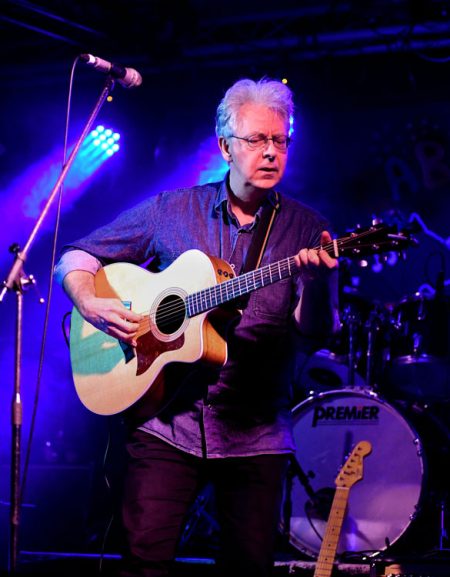
Playing live creates an immediate relationship between songwriter and listener. Someone hears a song, connects with it and perhaps wants to take some of that music home.
That’s one reason physical releases are becoming important again. A CD bought after a show is more than merchandise: it’s a direct connection between the person who made the music and the person who valued it enough to support what comes next.
Online, Bandcamp provides much the same relationship — a place to listen to the music, buy it and directly support its creation.
Life, the Universe + Music
Music isn’t only about releasing records.
Craig’s Life, the Universe + Music series grew from an interest in talking about the things surrounding music as much as the finished songs themselves: songwriting, recording, technology, experiences, mistakes, discoveries and the occasional musical rabbit hole.
The series is returning alongside new music and videos on YouTube, with shorter glimpses appearing through TikTok.
There are plenty more songs to come, some new and some that have been waiting patiently for their moment.